 EN
EN  ZH
ZH  KR
KR  BR
BR  ES
ES  IN
IN  IL
IL  JP
JP 

The beer marketing landscape has rarely been more competitive. Shifting consumer preferences and an increasingly crowded shelf have made it harder for breweries of all sizes to stand out. Craft beer’s explosive growth has matured into a saturated market, and producers face increased scrutiny from health-conscious, ethically minded, and value-driven drinkers alike.
These challenges are emerging as today’s food and beverage consumers become more intentional in how they choose what to buy. Beyond flavor and price, consumers are paying closer attention to how products are made, what a brand represents, and whether the brand aligns with their own ethical priorities. This creates a difficult balancing act for manufacturers, maintaining margins while also meeting rising expectations from customers. For kosher certifiers, these shifts underscore the growing importance of rigorous oversight as production environments evolve.
In this environment, differentiation is no longer optional. It is essential. Certifications have emerged as a powerful and often underutilized tool that beer manufacturers can use to build trust, signal credibility, and foster consumer loyalty in a crowded market. Kosher certification, in particular, while widespread in most food and beverage categories, has only recently become a key strategic consideration for beer manufacturers in the United States. As production environments and consumer expectations evolve, this represents a unique opportunity at a critical time.
For many years, kosher consumers could reasonably assume that all beers on the market were inherently kosher. However, recent innovations in manufacturing and bottling, along with the rise of experimental and specialty recipes, have changed that assumption. Today, the kosher market is increasingly aware that because some beer companies have expanded their product lines to include kosher-sensitive ingredients such as lactose, flavors, and various fruit products, automatic kosher status can no longer be taken for granted.
Additional kosher concerns arise from the growing complexity of shared production facilities. Some beer bottling and canning facilities now process more complex products in addition to beer, such as clamato-style beverages or ready-to-drink cocktails. From a kosher perspective, this raises important questions about whether equipment used for beer processing can still be assumed to meet kosher standards without proper oversight. These developments reflect broader changes in beverage manufacturing rather than any single policy shift and have led to greater emphasis on verification across the kosher certification landscape.
As a result of these changes, kosher consumers have begun to demand that their beer and alcoholic beverages carry reliable kosher certification. Kosher restaurants and caterers report that their certifying agencies are now insisting that they purchase only kosher certified brews, reinforcing the importance of verification rather than assumption.
The good news is that this shift presents a valuable opportunity for differentiation for companies that meet this consumer demand. Research consistently shows that kosher consumers are loyal to brands that take their preferences into account and make the effort to accommodate their needs. This loyalty underscores the role of kosher certification as a trust-building standard in an increasingly complex marketplace.
Beer companies that worry about having no prior experience with kosher or fear that their facility may not be optimized for kosher may find reassurance by collaborating with OK Kosher, which has decades of experience working with some of the largest breweries around the world. By leveraging existing safety and quality protocols, OK Kosher helps simplify and demystify the kosher certification process, allowing manufacturers to take advantage of its marketing and operational benefits with minimal disruption.
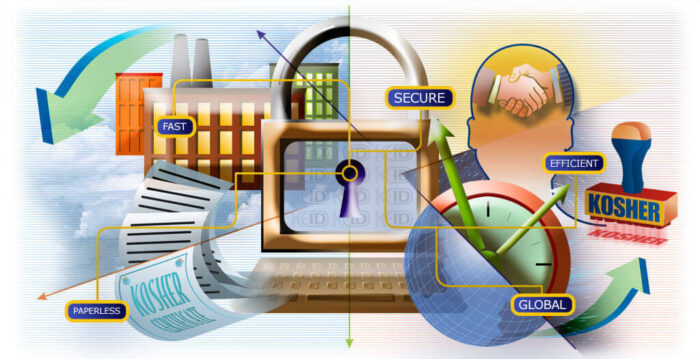
OK Kosher certification includes detailed oversight of all raw materials used in certified products, providing consumers with assurance that an independent third party has verified ingredient sources. When non-kosher materials are present in a facility for use in non-certified products, OK Kosher ensures that appropriate kosher cleaning procedures are carried out prior to certified production runs. All records are managed using advanced technology, with a strong commitment to security and confidentiality. In this manner, both manufacturers and consumers benefit from consistent and professional kosher supervision.
When choosing a kosher certifier, it is important to select one with deep familiarity with manufacturing processes, but it is equally important to choose a symbol that carries authority and credibility with consumers. The OK Kosher symbol is widely recognized and trusted around the world. Now in its 90th year, OK Kosher is one of the largest kosher certifiers globally, with thousands of certified products in more than 100 countries. For kosher consumers, the OK symbol remains a familiar and respected indicator of reliability.
By combining a flexible and cooperative approach with global recognition and strong consumer trust, OK Kosher provides beer manufacturers with a meaningful way to stand out in a crowded marketplace at a time when differentiation has never been more important.