 EN
EN  ZH
ZH  KR
KR  BR
BR  ES
ES  IN
IN  IL
IL  JP
JP  TH
TH 
Published:
September 1, 2026
Author:
Editor
Reading time:
4 minutes

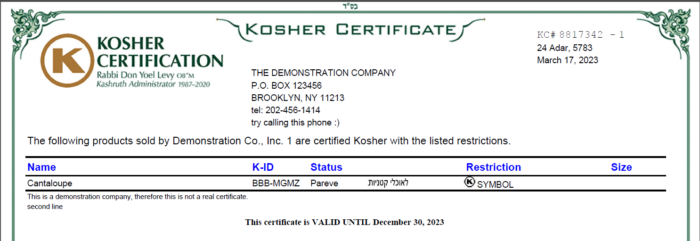
The kosher certificate was submitted. The ingredient was reviewed and approved by OK Kosher. Everything on the paperwork appeared to be in order.
Then the product arrived.
The vendor printed on the label was not the vendor listed on the kosher certificate.
Nothing was wrong with the certificate. Yet the certificate and the label did not appear to describe the same material.
When receiving an approved kosher ingredient, facilities should verify that the vendor name, product name, product code, and relevant kosher information on the incoming material match the documentation under which the ingredient was approved.
This type of discrepancy can be easy to miss when ingredients are purchased through brokers or distributors. The company selling the material may not be the company that manufactured it.
For personnel responsible for maintaining a facility’s kosher program, that makes kosher ingredient receiving more than a check of what was ordered against what was delivered.
It is an opportunity to confirm that the material in front of you is the same material that was reviewed and approved.
Kosher Ingredient Receiving Starts With the Label
When a new ingredient is submitted for kosher approval, the vendor name, product name, and product code matter.
A kosher review is performed using specific information about a product, including its vendor and product identification and supporting documentation.
That makes the receiving label one of the most important verification tools available.
Consider a product purchased through a supplier:
Purchase Order: Ingredient X
Supplier: Supplier A
Kosher Certificate Submitted: Supplier A / Ingredient X / Product Code 123
Product Received: Supplier B / Ingredient X / Product Code 123
Each document may appear perfectly acceptable on its own.
The discrepancy only becomes visible when they are compared.
The question at receiving is therefore not simply:
“Is this the ingredient we ordered?”
It is also:
“Is this the ingredient that was approved?”
OK Kosher’s Receiving Guidelines instruct receiving personnel to verify that incoming labels match the approved ingredient records, including the vendor name and product identification.
When a Kosher Ingredient Supplier Isn’t the Manufacturer
A supplier may source what appears to be the same ingredient from different manufacturers.
The supplier may not change.
The ingredient description may not change.
The raw-material code may not change.
The manufacturing source, however, can.
The manufacturer will not necessarily be the name shown on the received label. A product may be private labeled or may pass through a broker, distributor, or repacker.
What matters at receiving is that the vendor name, product name, and product code on the material match the applicable kosher documentation under which the ingredient was approved.
If a supplier, broker, or distributor repacks or relabels a manufacturer’s certified product under its own name, the manufacturer’s kosher certificate alone does not establish that the relabeled or repacked product is covered.
This is particularly important when the new label carries a different kosher symbol—or no kosher symbol at all.
Three Kosher Ingredient Receiving Checks
- Is this the approved product?
Does the product received match the product identified in the approved kosher documentation, including the product name and product code where applicable?
- Is this the approved vendor?
Does the vendor shown on the label match the vendor listed in the approved ingredient records and supporting kosher documentation?
- Has anything changed?
Has the vendor, product identity, product code, labeling, kosher symbol, or other relevant information changed?
These checks become especially important when the same ingredient can be supplied through different vendors, brokers, distributors, or repackers.
What Should Receiving Personnel Verify?
When an approved kosher ingredient arrives at a facility, receiving personnel should confirm that:
- The product name matches the approved ingredient record.
- The product code matches where applicable.
- The vendor shown on the label matches the approved vendor information.
- The relevant kosher information is consistent with the documentation under which the ingredient was approved.
- Any change in vendor, product identity, labeling, or kosher symbol is identified before the ingredient is used.
These checks help confirm that the material entering the facility is the same material covered by the facility’s approved kosher ingredient records.
Approval Reviews the Documentation. Receiving Verifies the Material.
There is an important distinction between the two.
The kosher ingredient approval process establishes what may be used.
Receiving confirms what actually arrived.
Most of the time, everything will match.
But the value of the check is knowing that it does.
This is why OK Kosher’s Receiving Guidelines emphasize verifying the vendor and product information shown on incoming labels against the approved ingredient records.
Receiving confirms that the material entering the facility matches the approved records.
The kosher question at receiving is not:
“Was this ingredient approved?”
It is:
“Is this the ingredient that was approved?”