 EN
EN  ZH
ZH  KR
KR  BR
BR  ES
ES  IN
IN  IL
IL  JP
JP  TH
TH 
Published:
October 6, 2026
Author:
Editor
Reading time:
5 minutes
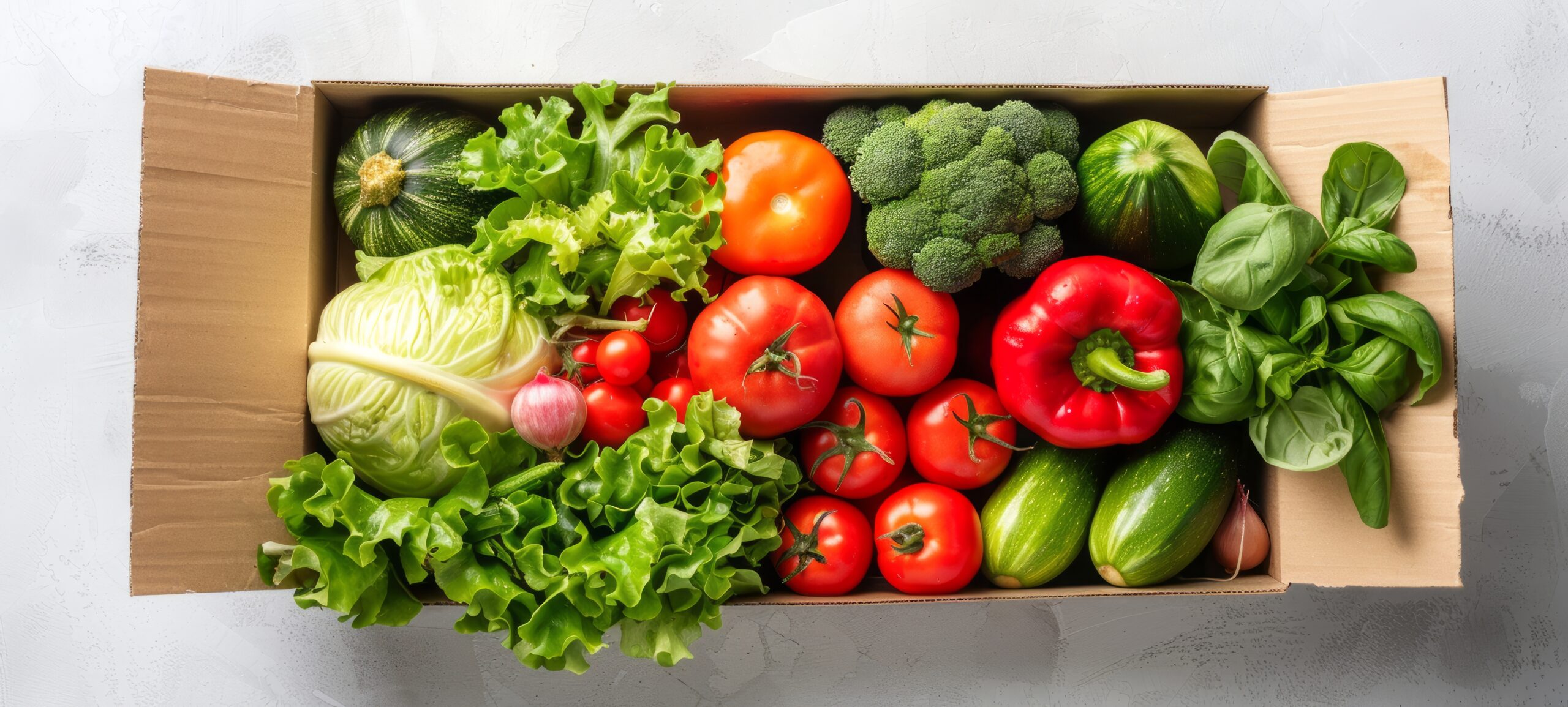
For food manufacturers, fruits and vegetables can look like some of the simplest ingredients in a kosher program.
After all, fruits and vegetables in their natural state are inherently kosher and pareve. But that does not mean every agricultural ingredient is automatically straightforward from a kosher manufacturing perspective.
Two factors can change the picture: insect infestation and country of origin.
For R&D, Quality, and Procurement teams, understanding these issues early can help prevent unexpected delays after a formula has been developed, a supplier selected, or production scheduled.
The Vegetable Is Kosher. The Insect Is Not.
Many fruits, vegetables and herbs can be susceptible to insect infestation. While the produce itself is kosher, insects are not and must be removed before use.
For manufacturers, this creates an unusual ingredient-control issue. Nothing non-kosher necessarily needs to be added to the product. The concern may already be present in the agricultural material itself.
And the ingredient name alone may not tell the whole story.
“Spinach,” for example, identifies the vegetable. It does not necessarily tell you the form in which it is supplied, which portion is being used, how it has been processed, or what steps have been taken to address potential infestation.
Those details can be relevant to the kosher evaluation.
Some commonly encountered examples of produce that may raise infestation questions include artichokes, asparagus, broccoli, cauliflower, leafy greens, spinach, strawberries, and raspberries. These are examples, not an exhaustive list. Other fruits, vegetables, herbs, and agricultural ingredients may also present infestation concerns depending on the product and circumstances.
Why Can the Form of a Vegetable Matter?
There are two separate kosher considerations that can arise when evaluating fruits and vegetables: infestation concerns related to the form or cut of the produce, and kosher concerns related to processing.
First, not all produce presents the same infestation challenge. Insects can be easier to detect and remove from some fruits and vegetables than from leafy or tightly structured produce, where they may be harder to reach through ordinary washing and inspection.
The form in which an ingredient is supplied can matter as well. Whole spinach, chopped spinach, and different cut sizes may present different conditions for addressing potential infestation.
Separately, it is important to determine whether the fruit or vegetable is truly raw or has undergone processing. Artichokes, for example, may be supplied canned. Even when no ingredients or additives have been added, processing can introduce additional kosher considerations because the equipment itself may affect the kosher status of the product. This can be particularly relevant in processes such as canning and freeze-drying.
The takeaway is practical: the name of the fruit or vegetable alone may not provide enough information for a kosher evaluation. Its form and cut may be relevant to infestation concerns, while its processing method may raise a separate set of kosher considerations.
Food Safety and Kosher Are Asking Different Questions
Produce processors usually operate under extensive food-safety, sanitation, and quality-control programs.
Those controls are essential, but kosher infestation presents a different question:
Does the process adequately address insects that may be present in this agricultural product?
An insect does not need to represent a food-safety hazard to create a kosher concern.
For Quality teams, that distinction is important. A supplier can meet its microbiological, sanitation, and quality requirements while additional kosher evaluation may still be necessary.
This is why a kosher certifier may need to understand not only what the ingredient is, but also how it is processed.
How leafy vegetables can be supervised and verified as insect-free is a separate topic beyond the scope of this article.
A Kosher Symbol Is Not the Entire Picture
Because fruits and vegetables are inherently kosher in their natural state, a manufacturer might reasonably assume that if a processed agricultural ingredient also carries kosher certification, there is little more to evaluate.
But kosher certification on an ingredient does not automatically mean that the ingredient is approved for use in an OK-certified facility. This principle applies to ingredients generally, but it can be particularly easy to overlook with fruits and vegetables.
Approval is based on the specific ingredient, its source, and the certification information provided for that ingredient. An ingredient certified by a particular kosher agency may be acceptable in one case, while another ingredient bearing certification from the same agency may require additional review.
The same applies when suppliers change. What appears to be the same ingredient from a different source should not automatically be assumed to carry over the approval of the original one.
For Procurement, the question is therefore not only:
“Does this ingredient have kosher certification?”
It is:
“Is this specific ingredient from this specific source approved for use in our kosher program?”
Country of Origin Can Matter Too
Infestation is not the only reason agricultural ingredients deserve a closer look.
Country of origin can also have kosher implications.
Fruits and vegetables grown in Israel—whether leafy or not—may be subject to additional kosher requirements because Jewish law includes agricultural laws that apply specifically to produce grown in the Land of Israel.
As a result, Israeli-grown produce requires additional kosher review before it can be approved for production.
This can be especially relevant when a supplier sources the same agricultural ingredient from different countries depending on season, availability, or price.
If Israel is a possible source, that information should be identified during the ingredient-approval process.
Bring Us Into the Conversation Early
R&D, Quality, and Procurement teams do not need to know the answer to every kosher question. Their role is to recognize when there may be a question and bring it to the right people early.
The best approach is to involve your Rabbinic Coordinator or OK Account Representative when developing a new product. Share what you are planning to make, what ingredients you are considering, and what is important to the product from a formulation, sourcing, and production perspective.
From there, we can guide you through any kosher requirements, approvals, or additional review that may be needed. And, if an ingredient presents a challenge, we will work with you to determine whether there is a practical solution or an appropriate alternative.
You do not need to have all the kosher answers. You just need to bring us into the conversation early enough to help you find them.