 EN
EN  ZH
ZH  KR
KR  BR
BR  ES
ES  IN
IN  IL
IL  JP
JP  TH
TH 
Published:
October 14, 2026
Reading time:
8 minutes
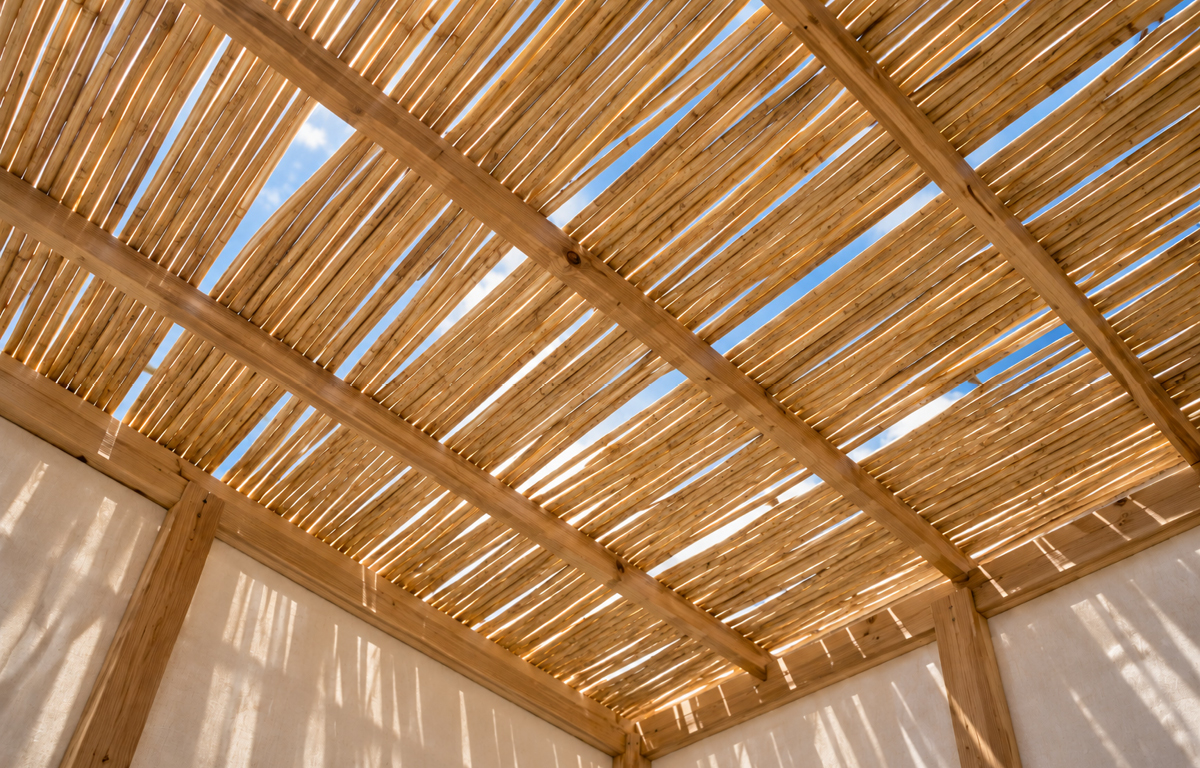
THE USE OF schach mats has become very common. This article will focus on the various halachic issues regarding the kashrus of such mats, and whether there is any concern with using them l’chatchila.
The Criteria for Schach
Let us begin with an overview of the primary criteria that determine which materials are kosher for schach. To be kosher for schach, the material must meet all of the following conditions:
IT MUST GROW FROM THE GROUND.
Schach must be made from material that grows from the ground. Therefore, animal hides (even if they have not been processed) and earth, for example, are not kosher for schach.
IT MUST NOT BE SUSCEPTIBLE TO TUMAH (מקבל טומאה).
Even something that grows from the ground is not kosher for schach if it is susceptible to becoming tamei. For example, food and wooden utensils are not kosher for schach even though they grow from the ground, because they can become tamei.
IT MUST RETAIN ITS NATURAL APPEARANCE.
Something that grows from the ground and is not susceptible to tumah is still not kosher for schach if it has been sufficiently processed or transformed to the point that it no longer retains the appearance it had in its natural state.
Thus, ropes made from reed grass and similar materials are kosher for schach, while ropes made from flax, hemp, or canvas are not kosher for schach.
IT MUST BE MADE FOR SHADE.
A sukkah and its schach must be made for the sole purpose of providing shade. Therefore, a roof, even if it meets the basic criteria for kosher schach (it grows from the ground and is not susceptible to tumah), is nevertheless pasul mi’d’oraisa, since it is intended to serve as a permanent dwelling rather than merely provide shade.
IT CANNOT BE MADE FROM MATERIAL NORMALLY USED FOR ROOFING.
Based on the above principle, the Mishnah and Gemara establish an additional rule: Materials that are normally used for roofing, such as wide wooden boards, are pasul mi’d’rabbonon for schach even when placed specifically to provide shade and not to serve as a roof.
MA’AMID
Any material that is pasul for schach should not be used l’chatchila to support the schach. This is known as gezeiras ma’amid. The reason for this decree is that one might mistakenly conclude that just as it is permissible to use such material to support the schach, it is likewise permissible to use it as schach itself9. However, b’dieved, if one did use something that is pasul for schach as a ma’amid, the Sukka is still kosher, and one may sit in it even l’chatchila.
Mats
With the above principles in mind, let us turn our attention to the halachic status of mats10.
The Mishnah and Gemara11 discuss whether mats made from reeds are kosher for schach. Although the Mishnah specifically mentions reed mats, the same halacha applies to mats made from other materials. Likewise, it makes no difference whether the mat is smooth or rough12.
In short, the halacha is as follows:
A small mat13 is assumed to have been made for sitting or resting on. It therefore has the status of a keili and is susceptible to tumah, making it pasul for schach.
A large mat is assumed to have been made for providing shade. It is therefore not susceptible to tumah and is kosher for schach.
A person’s intention can change its halachic status. If a small mat was made for shade, or a large mat was made for sitting or resting, its status follows that intended use.
Intention vs. Established Minhag
There is an important machlokes Rishonim concerning the final point of “intention”: whether one’s intention can make a mat kosher for schach even in a place where there is an established practice to use mats of that size for sitting or resting.
Rabbeinu Yeshaya di Trani (the Ri”d) is of the opinion that the specific intention always determines the mat’s status.14
Rabbeinu Asher (the Rosh)15, however, disagrees. He says that where there is an established custom to use such mats for sitting or resting, even if the buyer intended the mat for schach, the mat would remain pasul because of ma’aris ayin (an observer might mistakenly assume that such a mat is always kosher for schach.)
The Shulchan Aruch and Shulchan Aruch Harav rule in accordance with the Rosh16.
The same would apply in a place where the mat is customarily used for roofing. Even if one made (or purchased) the mat with the specific intention of using it for schach, it remains pasul due to ma’aris ayin, since roofing materials are not kosher for schach17.
Buying a Mat
An additional point to consider: When purchasing a mat (in a place where there is no established custom regarding its use), whose intention determines the mat’s status? The manufacturer’s or the purchaser’s?
The Ri”d quoted above explains that when a craftsman makes a mat, his intention is that the buyer will use it for whatever purpose he chooses. Therefore, it is the buyer’s intention, rather than the craftsman’s, that determines the mat’s status for schach.
The Shulchan Aruch Harav, based on the Taz18, rules accordingly: where there is no established minhag regarding the use of the mats, we follow the buyer’s intention at the time of purchase, regardless of the size of the mat19. However, in a place where there is an established custom, we assume that the craftsman made the mat with the intention for which such mats are customarily used in that place, and that intended use determines the mat’s halachic status.
Schach Mats in Contemporary Times
Nowadays, at least in the Western world, mats are not commonly used for sitting, sleeping, or roofing. Therefore, mats made in the West can be considered kosher if purchased with the intention of using them for schach.
However, many mats are manufactured in the Far East, where mats are still commonly used for sitting, resting, or roofing.
Does this mean that such mats are pasul because they were made with the intention of being used for sitting or resting? Not necessarily. If the mats are produced industrially, in large factories, for export around the world, they can still be kosher for schach.
The reason is: When a company in the Far East manufactures mats for export, they are not making them with the assumed purpose for which such mats are used locally. Rather, their intention is neutral: the mats will be used in each destination according to the needs and customs of that place.
Therefore, the halachic status of the mat is determined by the purchaser’s intention.
As for the issue of ma’aris ayin, this would depend on the particular location. In countries or cities where such mats are customarily used for sleeping, sitting, or roofing, there may be concerns of ma’aris ayin. However, in places where mats are not commonly used for these purposes, ma’aris ayin would not be a concern.
OK Kosher Certified Schach Mats
Today, one can find schach mats certified by OK Kosher.
When setting up the production of these mats, Rabbi Don Yoel Levy, ע״ה, instituted two additional important policies to reinforce that the mats were being manufactured specifically for schach.
First, he made sure that it was not only the factory owner who knew the purpose of the production, but that the workers themselves were also aware of it. He accomplished this by hanging signs throughout the factory in the local language stating that the production was for schach. He also designated a worker to inform all the employees that the mats were being manufactured specifically for schach20.
Second, he arranged for a full bamboo slat to be placed after every group of half-bamboo slats in the mat. This made the mat uncomfortable to sit or rest on, further demonstrating that it was not intended for such use21.
1 ירושלמי סוכה פ”א ה”א
2 שו”ע סימן תרכט ס”ה, ובשו”ע הרב שם ס”ו
3 סוכה ח:
4 סימן תרלה ס”א. שו”ע הרב סימן תרכו ס”א. וראה במשנה ברורה סימן תרלה
סק”א
5 ראה שו”ע הרב ומשנה ברורה סימן תרכה
6 סימן תרכט סעיף יח ובמ”א ס”ק כ. הובא בשו”ע הרב סימן תרכט סעיף כט
7 סוכה יד.
8 יש דיון בפוסקים אם גזירת מעמיד הוא רק בדבר המקבל טומאה או בכל דבר
הפסול לסכך, ולהלכה נקטינן שהוא בכל דבר הפסול לסיכוך מדאורייתא, ראה שו”ע
הרב סימן תרכט סעיף ז, ובמשנ”ב שם
9 רמ”א סימן תרכט סעיף ז, ובשו”ע הרב סעיף יא ובמשנה ברורה ס”ק כב
10 סימן תרכט סעיף ו, ובשו”ע הרב סעיפים ז – י
11 סוכה יט: – כ.
12 לאפוקי מדעת הראב”ד בהשגות על הרמב”ם הלכות סוכה פ”א ה”ו
13 בבכורי יעקב )תרכט ס”ק ט( כתב )מיוסד על הר”ן( דנראה לו שכל שהיא
כקומת איש ומעט יותר שראוי לשכב עליה מקרי קטנה אבל יותר הרבה מקרי
גדולה
14 סוכה יט:
15 סוכה פ”א סימן לז
16 יש עוד דרך בנו”כ השו”ע להבין הגהת הרמ”א בנוגע מנהג המקום במחצלאות,
אבל בדרך שכתבנו בפנים כ”ה הבנת רוב הפוסקים, ראה בשו”ע הרב שם ובמשנה
ברורה ס”ק יז
17 בדרכי משה תרכט אות ד’ ובשו”ע סעיף ו, ובשו”ע הרב סעיף י’. ומקורו בכל
בו סימן עא
18 תרכט ס”ק ז
19 שהי’ מקום לומר דבמקרה כזה שאין דעת המועיל בשעת העשיי’ )כיון שאומן
עושה בסתם( אז הדין שאזלינן בתר פשטות הגמרא שגדולה סתמא לסיכוך וקטנה
סתמא לשכיבה, ובזה חידש לנו הרי”ד דאזלינן בתר דעת הלוקח
20 וראה סמוכין לזה בדעת תורה סימן תרכט סעיף ו’ ד”ה דהיינו
21 הרב ליווי בעצמו לא כתב מקור לחומרא זו, אבל מצאתי במאמר מרדכי סימן
תרכט ס”ק ד’ שדייק מדברי הטור שמחצלת קטנה אפילו אינה חלקה שאינה ראוי’
לשכיבה כ”כ סתמא לשכיבה ופסולה, ודייק מזה במאמר מרדכי שאם אינה ראוי’
כלל לשכיבה בודאי שאינה נפסלת