 EN
EN  ZH
ZH  KR
KR  BR
BR  ES
ES  IN
IN  IL
IL  JP
JP  TH
TH 
Published:
September 7, 2026
Author:
Rabbi Eli Lando
Reading time:
7 minutes

How does OK Kosher oversee the kosher certification of nearly 700,000 products manufactured in thousands of facilities in the four corners of the world? Above all, the answer is siyata d’Shmaya. Through that, generations of rabbonim have developed and refined a certification system over more than ninety years.
This article, the first in a series, focuses on the certification of manufactured products. Restaurants and other food service operations, IY”H, will be covered in a future article. We begin with the Rabbinic Coordinator.
The Rabbinic Coordinator: Designing the Kosher Program
Every company certified by OK Kosher is assigned a Rabbinic Coordinator (RC), a full-time rabbinic professional working from our headquarters or one of our regional affiliated offices. OK Kosher’s Rabbinic Coordinators come from diverse backgrounds, including Lubavitch, Litvish, and various Chassidic communities, from the United States, Israel, Europe, Australia, and South America. Despite this diversity, they all share a common foundation as accomplished talmidei chachomim and B’nei Torah, operating under the guidance of the same rabbinic leadership.
Each RC is assigned a portfolio of companies based on the complexity of their operations, industry type, the RC’s expertise and experience, and, where appropriate, geographic location. This ensures that every kosher program is overseen by an RC whose knowledge is well suited to the facility’s production processes and certification needs.
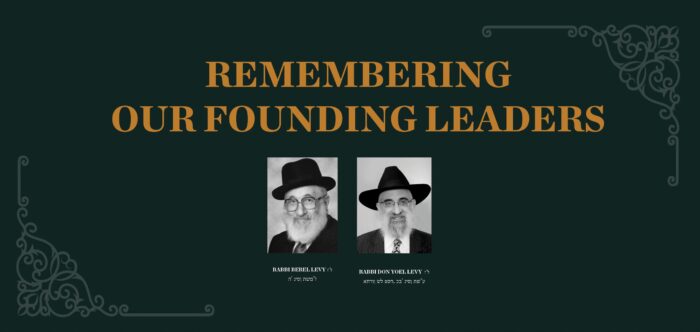
The RC serves as the architect of the kosher program. The mashgiach conducts inspections according to that blueprint, while the RC continually evaluates, administers, and refines the program as the company’s operations evolve. Rabbi Don Yoel Levy, OB”M, often summarized the RC’s responsibility with a simple expression: “The buck stops with the RC.” The RC bears ultimate responsibility for designing, maintaining, and overseeing every aspect of the company’s kosher certification program.
The Executive Vaad HaKashrus
Every RC operates within the framework established by the organization’s highest rabbinic authority, the OK Kosher Executive Vaad HaKashrus. Building upon the legacy of Rabbi Don Yoel Levy, OB”M, the Vaad establishes policies, consults with leading Poskim, provides guidance to the Rabbinic Coordinators, and safeguards the organization’s kashrus integrity.
To maintain consistency and strengthen standards, the Vaad holds monthly RC meetings where Rabbinic Coordinators share experiences, discuss new developments, and refine kosher policies and procedures. Knowledge gained across thousands of certified facilities is shared throughout the organization.
Not From Behind the Desk
Much of an RC’s ongoing responsibility involves reviewing mashgiach reports, evaluating company requests, and ensuring that every proposed change remains consistent with the kosher program. As companies evolve, the RC updates the kosher program and the certification system as necessary so that all procedures, safeguards, and kashrus requirements continue to be properly maintained.
A defining characteristic of OK Kosher’s certification program is that Rabbinic Coordinators are not confined to office administration and paperwork. On average, they spend approximately half of their time in the field, visiting manufacturing facilities around the world. This continuity allows the RC to combine firsthand knowledge of the operation with ongoing oversight.
The Initial Visit: Building the Blueprint
Rabbi Berel Levy, OB”M, would often say, “Any hechsher—including mine—is only as good as the last inspection.” Every inspection is important, but its success depends on having the right foundation.
For that reason, another defining characteristic of OK Kosher’s approach is that the initial visit to a newly certified facility is typically conducted personally by its assigned Rabbinic Coordinator.
The RC studies what the company manufactures, how raw materials move through the facility, how production is conducted, and how finished products are packaged, developing a thorough understanding of the entire operation.
With that understanding, the RC identifies every point at which kosher compliance could potentially be compromised. Some risks arise inadvertently, while others stem from the operational realities of manufacturing; the kosher program must accommodate these realities while maintaining full compliance with kashrus requirements.
The RC then designs the systems by which kosher compliance will be maintained throughout the operation. Wherever appropriate, existing company controls for quality, traceability, scheduling, inventory, sanitation, and product consistency are incorporated into the kosher program, while independent kosher safeguards are established where necessary.
The RC also determines how the mashgiach will independently verify that the kosher program is being properly implemented. Verification may include reviewing company records, direct observation, ingredient verification, equipment inspections, supervising kashering where required, and other methods. The mashgiach’s responsibilities are tailored to the operation and the risks identified during the initial visit.
The findings are documented in a comprehensive Initial Visit Report that serves as the blueprint for the facility’s kosher program. The report includes detailed instructions for both plant personnel and the mashgiach, specifying how production is to be conducted and how ongoing compliance is to be independently verified. Before the certification program becomes official, the Initial Visit Report and the detailed instructions are reviewed by senior Rabbinic Coordinators and members of the Vaad HaKashrus. This collaborative review process provides an important safeguard, ensuring that every aspect of the kosher program is clearly defined, practical, and complete before certification becomes active. It is a process that is regularly put to the test in real-world scenarios.
Case Study: When the System Is Put to the Test
From the outset of the certification process, the assigned RC conducted a thorough review of a vegetable glycerin manufacturer’s operations. During the initial inspection, he identified that the facility also repackaged nonkosher vegetable glycerin (a compatible ingredient) on equipment that was compatible with kosher production.
Compatible ingredients are identical ingredients that have different kosher statuses. Compatible equipment refers to machinery capable of processing either kosher or non-kosher products without physical modification.
The kosher requirement in such a situation is to have ongoing rabbinic supervision (mashgiach temidi) to ensure that only approved raw materials and equipment are used and that no unauthorized production takes place between kosher runs.
Rather than viewing this as an obstacle, the RC worked closely with company management to develop a certification plan that would meet kosher requirements while remaining practical for the facility’s operations. Together, they established a program in which the company would discontinue handling non-kosher material within the certified facility.
At the request of the Vaad HaKashrus, a mashgiach was then dispatched to independently verify on-site that the equipment had indeed been removed and that all approved operational changes had been implemented exactly as proposed. Only after the on-site findings were reviewed and confirmed was the kosher certification program approved.
The Annual Visit
Every certified company receives an annual visit from an experienced Rabbinic Coordinator, regardless of how many routine inspections take place during the year by the assigned mashgiach. Unlike routine inspections, these visits are performed by RCs who possess the experience and expertise required to design kosher programs for complex manufacturing facilities.
Reflecting the philosophy of Rabbi Don Yoel Levy, OB”M, every kosher program benefits from a second set of experienced eyes each year. These annual visits are frequently also performed by an RC other than the one assigned to the company, allowing experienced rabbonim to review each other’s work and providing an additional layer of quality assurance beyond the routine inspections performed by the mashgiach.
Walking through the facility together with the mashgiach, the reviewing RC evaluates the kosher program, verifies that it continues to reflect the facility’s current operation, and identifies any changes that may require modifications to the program.
A System of Continuous Improvement
Certification is not a one-time event but an ongoing process.
After every inspection, the mashgiach submits a detailed report through OK Kosher’s proprietary digital certification system, where it immediately becomes part of the facility’s permanent certification record. The Rabbinic Coordinator, the Vaad HaKashrus, and other authorized personnel can instantly review the report, along with previous inspections, correspondence, approvals, and internal notes. Because all information is maintained within a centralized system rather than individual files or personal memory, every significant decision, instruction, and development is preserved for future review.
The platform also incorporates the RC’s kosher rules into the facility’s electronic certification profile. These rules govern ingredient approvals, product approvals, and other day-to-day certification decisions, helping prevent the inadvertent approval of products, ingredients, or operational changes that are inconsistent with the facility’s kosher program. As equipment, products, personnel, and production methods change, the certification profile and supporting documentation are updated accordingly, ensuring that the kosher program continues to reflect the facility’s current operations. By embedding the RC’s decisions directly into the certification system, the platform helps prevent many potential errors and ensures that no significant certification decision depends on a single individual acting alone.
The food industry is constantly evolving, and no system is immune to human error. Recognizing that reality, OK Kosher continually evaluates its procedures, identifies opportunities for improvement, and develops safeguards designed not only to detect problems, but to prevent them. Every inspection, every review, and every challenge become an opportunity to strengthen the certification system for the future.
For consumers, the OK Kosher symbol is a familiar mark found on food packages around the world. Behind that symbol stands a carefully designed system of rabbonim, industrial expertise, firsthand field experience, independent review, proprietary technology, and continuous improvement—all working together every day to safeguard the integrity of kosher certification.