 EN
EN  ZH
ZH  KR
KR  BR
BR  ES
ES  IN
IN  IL
IL  JP
JP  TH
TH 
Published:
March 25, 2026
Author:
Rabbi Eli Lando
Reading time:
4 minutes
When Pesach arrives, something shifts in a Jewish home. The standards rise. Details matter more. Everyone becomes a mashgiach.
Kashrus is a year-round responsibility, and Pesach makes that responsibility visible. Even the greeting changes. We do not simply say, “Gut Yom Tov.” We add, “Kosher and Freilichen Pesach.” The brocha itself reflects heightened awareness.
The Torah defines Nissan as a beginning: “HaChodesh hazeh lachem rosh chadashim,” this month shall be for you the head of months. Nissan is far more than another point on the calendar. It is the starting point. It sets the tone for the year that follows.
The Arizal teaches that one who is careful with even a mashehu of chametz on Pesach is assured that nothing undesirable will happen throughout the year. The Zohar describes matzah as michla d’meheimnusa and michla d’asvasa, nourishment of faith and healing, and teaches that how we conduct ourselves on Pesach shapes us year-round.
Nissan teaches that what is established at the outset shapes everything that follows, for it is the month of redemption, when the foundations of our identity were formed. So too, in kashrus, what is established at the outset shapes everything that follows.
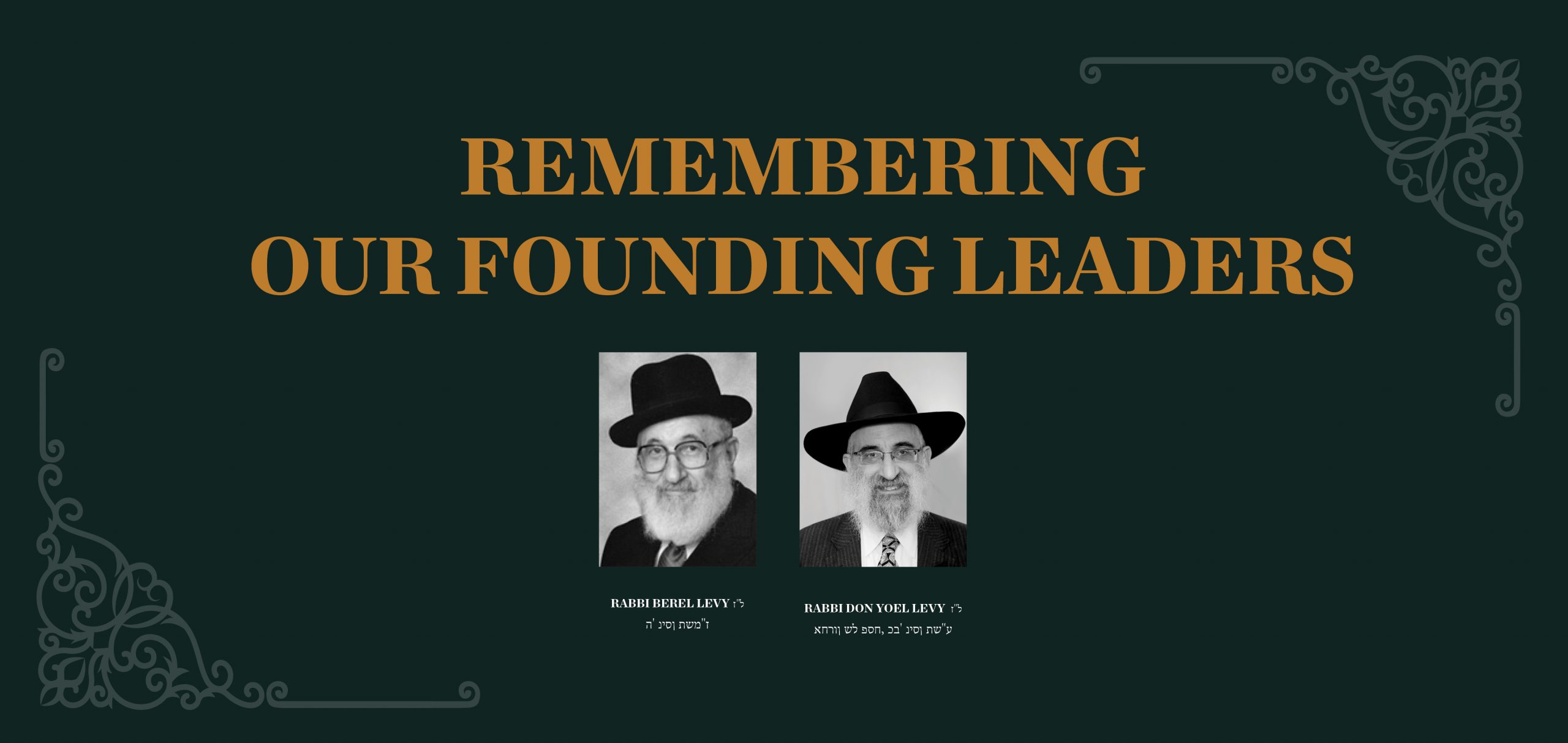
It is clear hashgochah protis that both Rabbi Berel Levy OB”M, who transformed the OK into a serious force in modern kashrus, and Rabbi Don Yoel Levy OB”M, who built it into the global organization it is today, completed their mission in this physical world in the month of Nissan.
Standards and Leadership
Rabbi Don Yoel Levy devoted his life to ensuring that standards were carefully maintained and strengthened. In past issues of Kosher Spirit, he often reflected on the mesorah he inherited from his father. He consistently returned to one theme: standards.
He spoke about responsibility. He spoke about continuity. He described his role as safeguarding what had been entrusted to him.
The humility was genuine. He consistently attributed what he built to what he had received. He saw himself as carrying forward a foundation already laid. But those who were closely involved understood something more. He did not simply preserve a mesorah. He deepened it. He strengthened it. He built upon it in ways that reshaped how kashrus operates today.
He articulated a clear hierarchy that guided OK’s decisions. His leadership was not theoretical; he remained actively involved in the field, even in his later years.
A kashrus agency answers first to Hashem, and only after that, to itself. That framework shaped policy and daily decision-making. Integrity was the working standard – a value actively expressed in practice. He also conveyed something important: a mesorah lives and advances through continued growth. That understanding shaped how he led and shapes how we continue.
That same sense of responsibility defined how he related to people.
The Rambam writes in Hilchos Talmud Torah that just as students must honor their teacher, so too a teacher must honor his students and draw them close, loving them as children who bring merit in this world and the next.
Those of us who worked closely with Rabbi Don Yoel Levy felt that relationship. His expectations were high and his standards uncompromising, yet alongside that strength was genuine care. He invested in people and entrusted responsibility, allowing people to rise to it. We strive to carry that forward and hope that in doing so, we bring true nachas.
Policy and Responsibility
Reliable kosher certification is not only about knowing what is technically permissible. It is about policy – how decisions are made when more than one legitimate halachic approach exists.
Something that appears simple on a label can involve significant halachic and industrial complexity. In many cases, there is more than one acceptable approach. (Ed. Note: See article on citric acid for Pesach in this issue.)
The responsibility of a kashrus agency is to determine which approach most faithfully reflects its standards and its guiding principles. At OK Kosher, our Executive Vaad HaKashrus of Rabbonim, building on the standards established by Rabbi Don Yoel Levy and in consultation with our Poskim, approaches those situations through careful consideration, ensuring that the policy fully reflects consistency and halachic responsibility. That approach guides how we operate throughout the year.
Six Years Later
Six years have passed since Rabbi Don Yoel Levy’s petirah.
The focus has been clear: strengthening systems, refining supervision, and expanding kashrus responsibly to communities and industries around the world without compromise.
Certification is approached as an ongoing process that includes review and verification. The systems in place continue to be evaluated and refined.
From Nissan to Nissan
Chazal say, “In Nissan we were redeemed, and in Nissan we are destined to be redeemed again.”
Beginnings matter.
Rabbi Berel Levy laid a foundation. Rabbi Don Yoel Levy reinforced and structured it.
Today, the Vaad and leadership of OK Kosher continue that work, building on what we received from these giants. The Executive Vaad HaKashrus approaches this responsibility with the same understanding: a mesorah lives and advances through continued growth.
From year to year, the work continues, carried forward with care and accountability.
May we be zocheh to the ultimate redemption, to celebrate Pesach in the Beis HaMikdash HaShlishi, and to witness the fulfillment of “Hakitsu v’ranenu shochnei afar.”