 EN
EN  ZH
ZH  KR
KR  BR
BR  ES
ES  IN
IN  IL
IL  JP
JP  TH
TH 
Published:
September 7, 2026
Author:
Rabbi Levi Schapiro
Reading time:
7 minutes
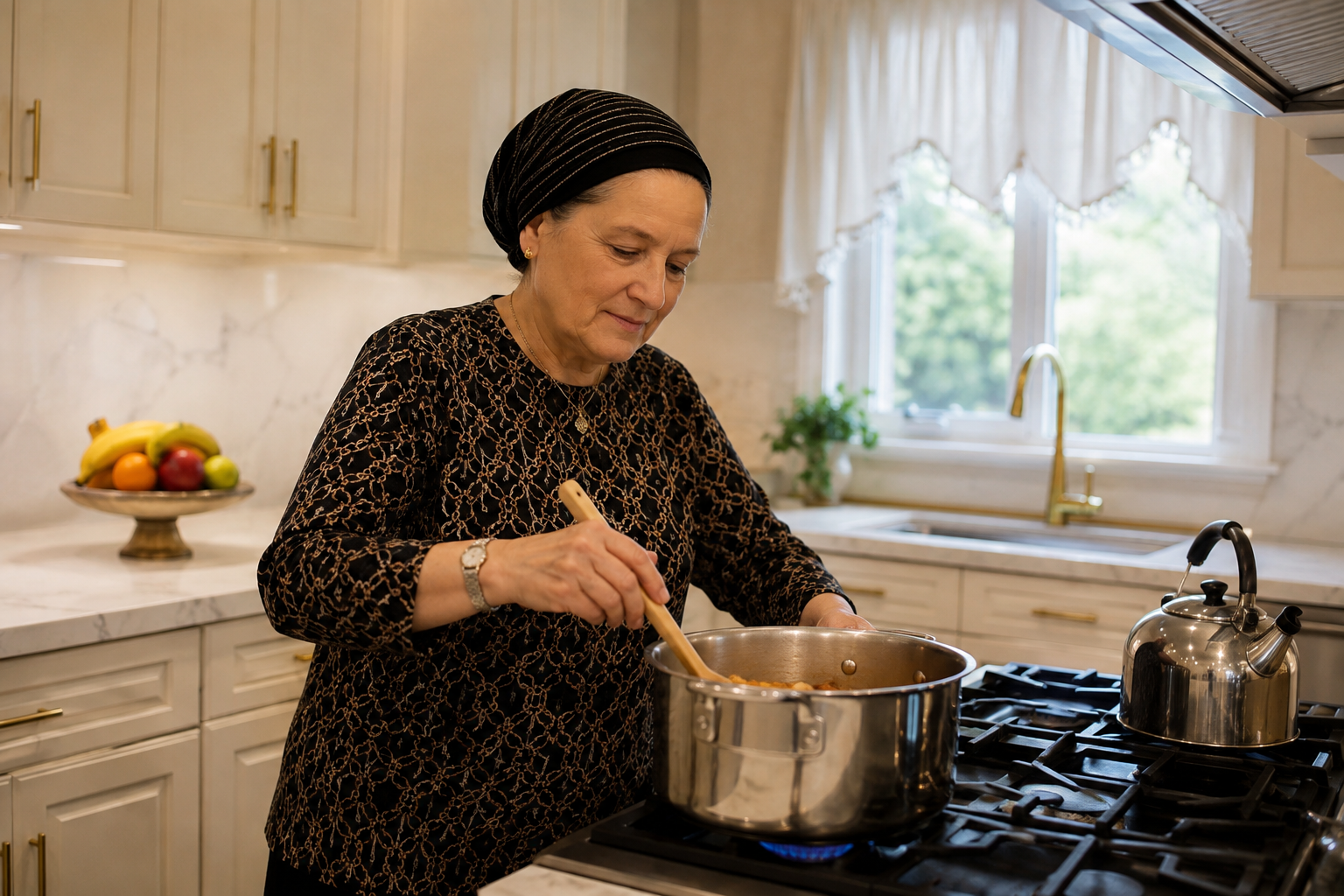
The Torah states regarding Yom Tov, כל מלאכת עבודה לא תעשו and אך אשר יאכל לכל נפש הוא לבדו יעשה לכם . Chazal understand from these pesukim that the melachos forbidden on Shabbos are likewise prohibited on Yom Tov, except for those directly related to food preparation. Although this is broad in principle, the Chachomim did not want people to postpone all food preparation until Yom Tov itself. Therefore, to preserve the kedushah and spirit of Yom Tov, they enacted certain limitations and prohibited activities that could be done before Yom Tov without compromising the freshness or quality of the food. At the same time, they allowed those that enhance Simchas Yom Tov.
Melachos that are normally performed well in advance, such as harvesting, milling or grinding, other farm-related activities, trapping a wild animal, and milking an animal, may not be performed on Yom Tov. In addition, any food preparation that can be done before Yom Tov without a loss of quality should not be done on Yom Tov.
Accordingly, when cooking on Yom Tov, one must be mindful of the halachic guidelines.
PREEXISTING FLAME
Since lighting a fire can be done before Yom Tov, one may use an existing fire, or increase the size of an existing flame, but may not create a new fire on Yom Tov, whether by striking a match or by other means. To cook on Yom Tov, the stovetop flame should be lit before Yom Tov. If the flame needs to be increased on Yom Tov, that may be done.
In general, extinguishing is not a melacha that is permitted on Yom Tov, since it is not ordinarily done for the purpose of food preparation; on the contrary, it stops the cooking process. If a flame must be lowered so that the food will not burn, there is a machlokes haPoskim¹ as to the proper course of action. Ideally, one should light a smaller flame from a preexisting flame and cook on that fire. If there is a significant need and lighting another flame is not possible, one may lower the flame to cook the food properly.
If one forgot to leave a flame burning before Yom Tov, and it is possible to turn on the gas flow without activating the electric igniter², one may use a flame from a candle or from a neighbor to light the stovetop. One may also ask a non-Jew to light the stove.
When cooking with electric burners or ovens, the temperature may not be increased or decreased on Yom Tov, because the use of electricity involves melachos that are not permitted on Yom Tov. Even according to the opinions that view electricity as a form of havarah (burning), which is permitted for food preparation on Yom Tov, each additional activation or increase of voltage is considered a new “fire.” Certainly, one may not adjust the electronic settings of an oven or cooktop on Yom Tov. For ovens with Shabbos mode, one should consult the specific user guide and the relevant rabbinic certification.
Using hot water from a typical household sink is forbidden on Shabbos because, as hot water is drawn, new cold water enters the tank and is cooked. On Yom Tov, however, this is permitted when needed, only if you have a traditional hot water tank. An instant hot-water dispenser at the sink, which activates an electric element each time it is used, may not be used on Yom Tov.
NEEDED FOR YOM TOV
The Torah permits cooking on Yom Tov only when the food is needed for that day of Yom Tov. One may not cook on Yom Tov for after Yom Tov, or even for the next day of Yom Tov. If one cooks earlier in the day and the food is ready and fit to be eaten on that same day of Yom Tov, but he intends to eat it only after Yom Tov, this is prohibited mi’d’rabbonon.
One may not prepare on Yom Tov for the following day. This includes removing food from the freezer to defrost if it will not be used that day or setting the table on the first day of Yom Tov for the second night.
However, one may clear the room or straighten the area if this is needed to use the room comfortably on the first day.
One may cook extra food on Yom Tov for use later, if it is cooked in the same pot at the same time, and one eats some of that food on the same day of Yom Tov. In addition, one should not verbally state that the extra food is being prepared for after Yom Tov.
When Yom Tov occurs on Friday, one may cook and prepare on Yom Tov for Shabbos only if an Eruv Tavshilin was made on Erev Yom Tov.
In addition, one may not cook for a non-Jew on Yom Tov. Therefore, one may not invite a non-Jew for a Yom Tov meal, lest one come to cook specifically for him. If a non-Jew arrives unannounced, he may be served food that was prepared on Yom Tov. If one has non-Jewish domestic help for whom he is responsible to provide meals, one may not cook separately for them, but may cook extra food to include them, if it is done simultaneously while cooking for one’s family (i.e., the pot is filled with enough food for all at the beginning of cooking).
KNEADING DOUGH
One may knead dough on Yom Tov. However, one may not measure the flour or other ingredients, because measuring is considered uvdin d’chol, a weekday-like activity, and resembles commercial practice. Even measuring for the purpose of a mitzvah is not permitted when it could have been done before Yom Tov.³ In addition, one should not sift flour on Yom Tov, since sifting can be done before Yom Tov without any loss of quality.
Performing the mitzvah of hafrashas challah is forbidden on Shabbos because it resembles tikkun kli, “fixing” or completing an item for use. One who kneads dough on Yom Tov may separate challah, since the prohibition is only mi’d’rabbonon and the Chachomim allowed it to encourage baking fresh bread for Yom Tov.
However, if one kneaded the dough before Yom Tov but did not yet bake it or separate challah, one may not separate challah on Yom Tov. Instead, one should not bake the entire batch; rather, one should leave part of it for after Yom Tov and separate challah from the remaining dough after Yom Tov.
Alternatively, if one needs more bread, one may knead a second batch of dough, combine the two batches in one container, and separate challah from the second batch on behalf of both batches. Since the separated challah may not be eaten, it is
considered muktzah and may not be handled. Therefore, when separating challah on Yom Tov, one should place it immediately in a safe location to be burned after Yom Tov and should not handle it again after it has been put down.
If one already has sufficient fresh bread for Yom Tov, one should not bake additional bread on Yom Tov.
PREPARED BEFORE YOM TOV
Food that was not available before Yom Tov may not be used on Yom Tov. For example, an egg laid on Yom Tov is muktzah and may not be used on that day of Yom Tov.4 On Rosh Hashanah, the egg may not be used on either day. Similarly, fruit that was still attached to the tree at the onset of Yom Tov and then fell on Yom Tov may not be used on that day.
TIKKUN KLI
Utensils may not be “fixed” or made usable on Yom Tov. For example, a dull knife may not be sharpened on Yom Tov. Pots, pans, or dishes that became treif may not be kashered on Yom Tov, and new dishes may not be toiveled on Yom Tov.
1 According to the Igros Moshe (Vol. 1:115, Vol. 4:103), lowering the flame is always permitted.
2 Check your user manual and verify if it is possible before Yom Tov.
3 If one wants to bake fresh challah on Yom Tov, the ingredients should be measured and set aside before Yom Tov.
4 If it was laid on the first day, it is permitted on the second day. If it was laid on the second day, it is permitted after Yom Tov. If it was laid on Erev Yom Tov that was Shabbos, it is ossur the first day of Yom Tov. If it was laid on Friday, the second day of Yom Tov, it is ossur on Shabbos. On Rosh Hashanah, the egg would be ossur on both days of Yom Tov and Shabbos.