 EN
EN  ZH
ZH  KR
KR  BR
BR  ES
ES  IN
IN  IL
IL  JP
JP 
Published:
December 12, 2025
Author:
Rabbi Sholom Ber Hendel
Reading time:
1 minute
What is sushi?
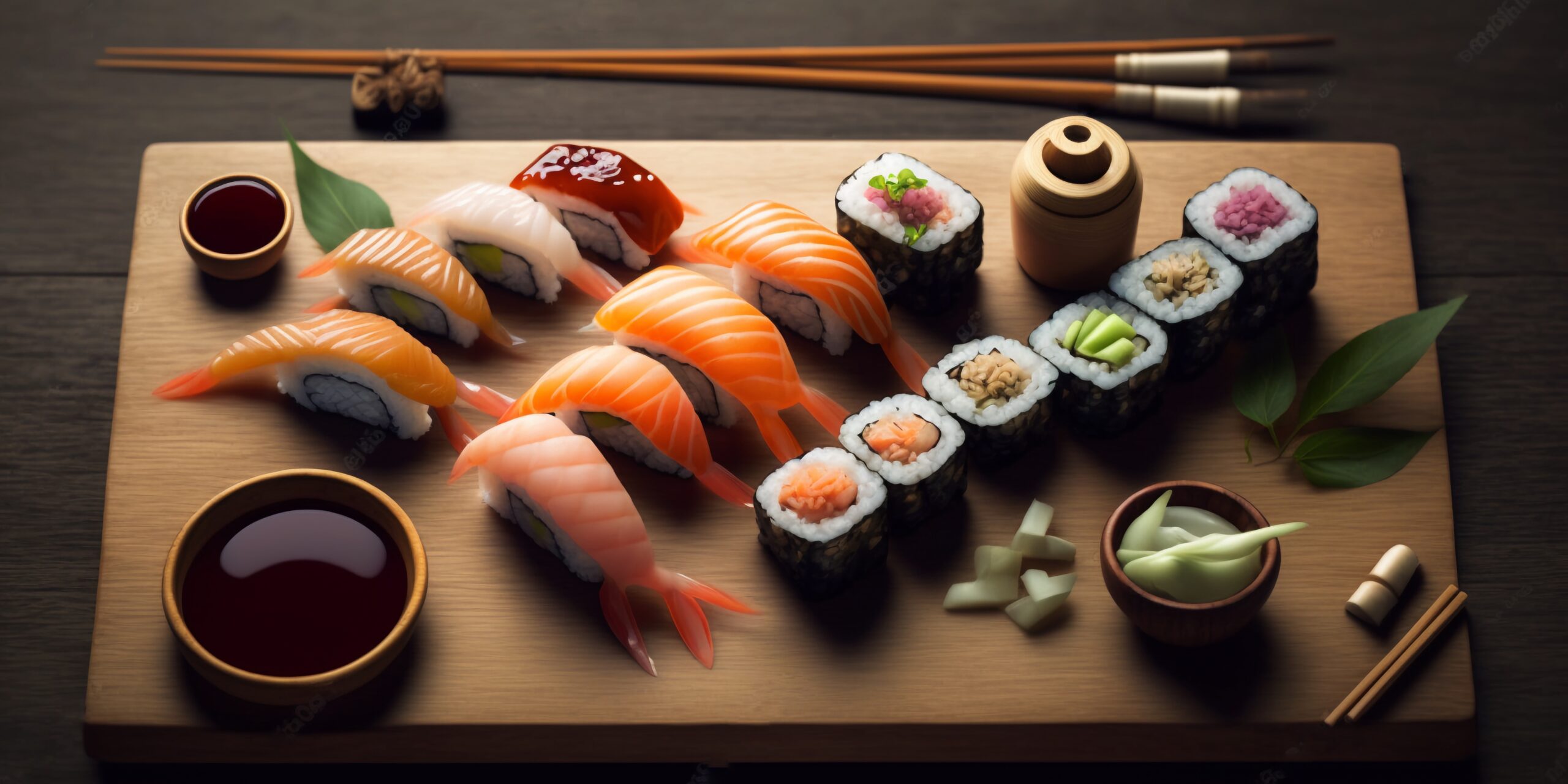
Sushi, which translates to “sour rice” in Japanese, is a traditional dish made from rice (mixed with rice vinegar), nori (seaweed), and fish (cooked or raw), vegetables, or a combination of both.
Sushi is typically served with soy sauce, wasabi, and pickled ginger. The soy sauce is used for dipping, wasabi to enhance the flavor of the fish, and the pickled ginger is eaten between pieces of sushi to cleanse the palate and enhance the flavor of the fish.
What are the ingredients in sushi?
There are many types of sushi and each type is made with a different combination of fish, vegetables, and nori. The one thing all sushi has in common is the rice, seasoned with rice vinegar, which is the base for all types of sushi.
Rice vinegar is created by converting the starch in rice into sugars. The sugars are then fermented to create sake (rice wine). The sake is then further fermented into rice vinegar, which is diluted with water to achieve the desired flavor and acidity.1
Many sushi rolls use nori as well. Nori is made by cultivating and harvesting seaweed from the sea, and is processed by washing, chopping, and blending it into a watery paste. The paste is spread onto a fine screen and dried into thin sheets, and then roasted, cut and packaged.
There are many different types of sushi:
• Maki (most common type in Japan): a sushi roll where rice and fillings are spread on a sheet of nori and then rolled and sliced into bite-sized pieces.
• Uramaki (most common type in America): like maki, but the rice is on the outside to make it more palatable to Americans who did not find the nori appealing.
• Tempura: battered and deep-fried sushi.
• Nigiri: small, oval-shaped balls of seasoned sushi rice with a slice of raw fish or other topping pressed onto it.
• Aburi: nigiri that is lightly seared with a culinary blowtorch. The searing process cooks only the outer layer of the fish while leaving the inside of the fish raw, creating a smoky flavor and a unique texture.
Is sushi kosher?
While raw rice is inherently kosher, cooked rice is subject to the laws of Bishul Yisroel, because rice is not edible raw and is considered suitable for a king’s table. Therefore, cooked rice is only kosher2 when a Jew is involved in the cooking process. Since most rice cookers automatically shut off after the rice is fully cooked, a mashgiach is needed to turn the cooker back on for each batch to ensure Bishul Yisroel.
Nori is known to be prone to infestation, which affects its kosher status. Sea creatures such as sea horses and mini shrimps can get caught in seaweed and can end up mixed in the product. The level of infestation varies depending on the time of the year (typically decreasing in the colder months) and depends on the processing methods used. The kosher certifying agency ensures there are effective systems in place to prevent infestation and inspect samples of the finished products to verify that the product is free of infestation.
Additionally, there are potential kashrus concerns related to the equipment used. Flavored seaweed that includes non-kosher flavoring can be processed on the same equipment.
Fish, a quintessential part of sushi, poses its own challenges. Once the kosher signs of a fish (the fins and scales) are removed, fish requires supervision by a mashgiach temidi.3 The only exception is salmon due to its unique red color. Kani, imitation crab, includes fish, which must be from a kosher-certified production.
Historically, fish has always required Bishul Yisroel, since it is not edible raw and is considered suitable for a king’s table. However, now that fish is commonly eaten raw in sushi, one might question whether it should still be subject to the laws of Bishul Yisroel. The consensus of the Poskim is that although many people eat raw fish in sushi, the consumption of raw fish has not become common enough to consider raw fish edible.
Aburi sushi undergoes a light searing process, and there is reason to suggest that it may not require Bishul Yisroel, since only the surface is cooked, and the same type of fish is also eaten raw in nigiri sushi. Nevertheless, OK policy requires the mashgiach to perform the searing process or light the torch.
Vinegar, soy sauce, wasabi, ginger, and any other condiments consumed with sushi require reliable kosher certification. Both the production process and the additives and processing aids can affect the kosher status.
Due to all the potential kashrus concerns, sushi should only be consumed with a reliable kosher certification to ensure that your sushi is kosher without compromise.
1 For more information about the process and kashrus of vinegar, see https://www.ok.org/consumers/a-closer-look-ingredients/what-is-white-vinegar/.
2 The same would apply to cooked vegetables that are not edible raw, such as sweet potatoes.
3 Shulchan Oruch, Yoreh Deah 118:1.
Rabbi Hendel is a member of the OK Kosher Vaad HaKashrus.