 EN
EN  ZH
ZH  KR
KR  BR
BR  ES
ES  IN
IN  IL
IL  JP
JP  TH
TH 
Published:
September 7, 2026
Author:
Rabbi Sholom Ber Hendel
Reading time:
5 minutes
What are apples?
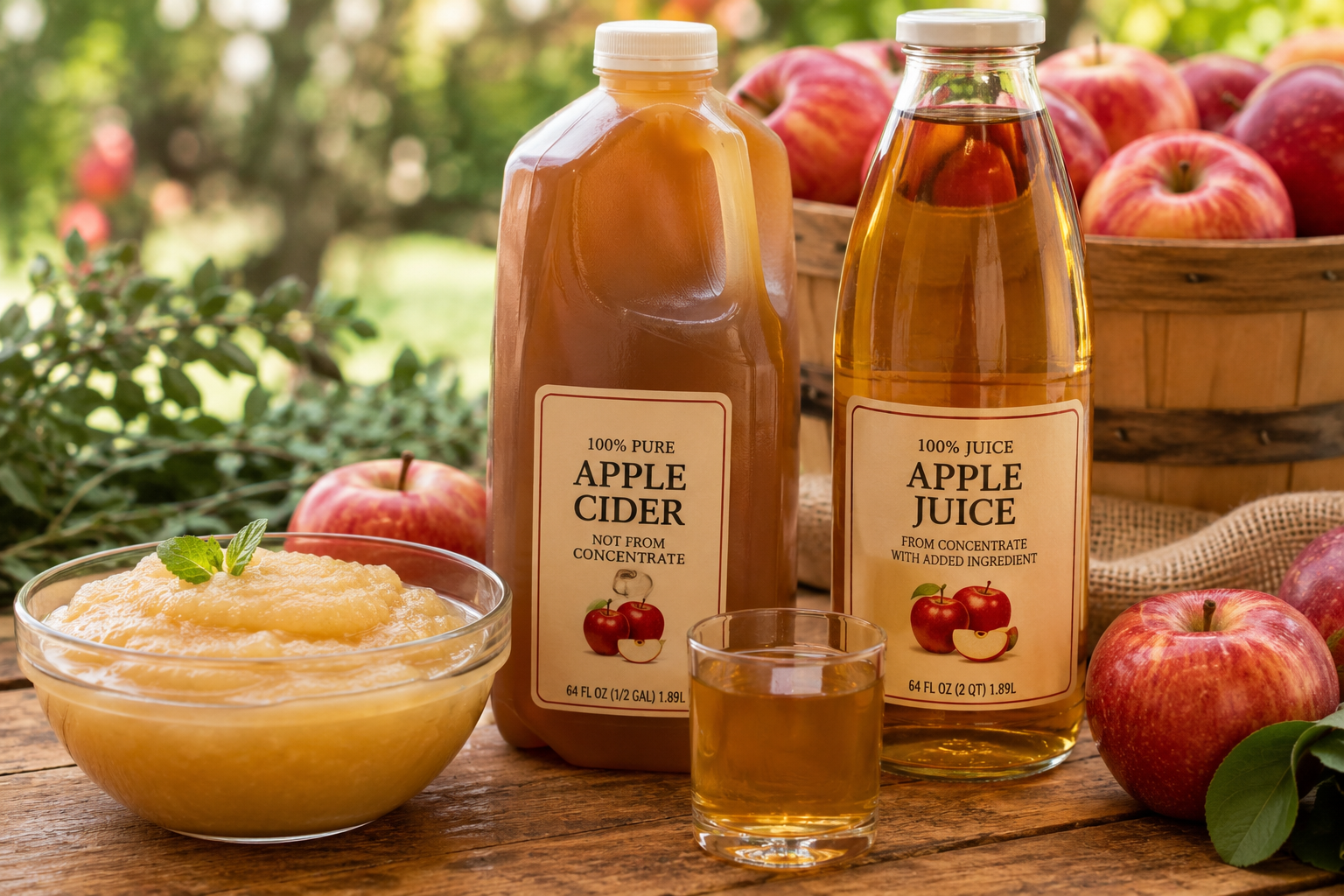
Apples are crisp, flavorful fruits and among the most widely enjoyed in the world. While they are delicious eaten fresh, they also serve as the basis for a wide range of popular products, including apple juice, apple cider, applesauce, and many other foods enjoyed around the globe.
In addition to their everyday popularity, apples hold a profound spiritual significance. It is customary to eat apples dipped in honey on the first night of Rosh Hashanah. The Taz¹ explains that the apple was specifically chosen because it represents the kabbalistic Chakal Tapuchin Kadishin (Holy Apple Orchard) mentioned in the Zohar.
How is apple juice made?
The journey from orchard to bottle involves a highly controlled, multi-step engineering process designed to maximize yield, preserve flavor, and ensure shelf stability.
To make apple juice, the apples are harvested during their peak season, thoroughly washed and sorted to remove debris and damaged fruit.
The clean apples are crushed into a thick, pulpy mash called pomace. At this stage, enzymes are usually added to break down the apples’ cell wall and pectin to extract the juice more efficiently. (Enzymes are not used when the pomace solids are needed for pectin production).
The pomace is then pressed and filtered to remove the solids, creating a cloudy juice, which can be used as is, or transformed into a clear apple juice (which is more popular). The liquid undergoes clarification in one of two ways, either by using enzymes that help break down the particles and then going through an ultrafiltration process, or by mixing the juice with gelatin or active carbons that bind to the particles and are then filtered out.
Now that the juice is clear, the apple juice is pasteurized to eliminate bacteria that cause spoilage, as well as mixed with ascorbic acid (Vitamin C) to prevent browning. At this point, the juice is most often packed in industrial packaging, or it is stored in large storage tanks.
To extend the shelf life of the juice and make it easier to store and ship, it can also be concentrated by removing the natural water (and natural aromas, which would be sent for further processing) in an evaporator under a vacuum. During the final manufacturing process, the water is added back.
Before the final packaging, the juice is mixed again, and at this stage additional water and aroma/flavor will be added if needed, in addition to citric and/or malic acids that are added to enhance flavor, balance sweetness, and prevent browning. Finally, the juice is pasteurized and packaged.
How is apple cider made?
The initial process is the same as for apple juice, where the apples are crushed into a thick, pulpy mash called pomace. The pomace is then pressed to squeeze out the juice while filtering out only the large particles, seeds, and stems, maintaining the natural cloudiness of the cider.
The cider is then pasteurized with a heat exchanger or with UV light (without heat) and then cooled and packaged.
Alcoholic (hard) cider is made by pumping the cider into fermentation tanks where yeast is added to convert the natural sugars into alcohol. At the end of the fermentation process the hard cider is filtered, CO2 is added, and then it is bottled.
How is applesauce made?
Apples are washed and scrubbed, peeled, cored, crushed, and cooked with steam. The sauce is filtered in a finisher, then sent to the mixing tank to be mixed with additives such as ascorbic acid (Vitamin C), sweetener, cinnamon, or a fruit base. The sauce is then filled into cups or jars.
Are apple products inherently kosher?
Apples grown in Israel are subject to the mitzvos hateluyos ha’aretz.
All of the ingredients and processing aids used in the process need to be kosher. There is a halachic discussion regarding the use of non-kosher gelatin in the apple juice clarification process. Some insist that only kosher filter aid is permitted because ein mevatlin issur l’chatchila, but others maintain that it’s allowed due to the low usage level below 1/60 and the fact that it is removed from the final product without providing any flavor (removal was always the intention).² On a practical level, the usage of gelatin for filtering is not so common these days in modern production systems.
The main concern for the kashrus of apple products is the equipment. While the equipment used for industrial manufacturing and packaging is typically dedicated to apple juice, it is common for equipment used for retail packaging to be shared with grape juice and dairy products. In addition, products that are packed in juice boxes and cartons can be processed in facilities that process non-kosher products and even serious treifos, such as chicken- or meat-based soups that can
compromise the status of the equipment.
Apple products always require a reliable certification to ensure that the equipment is dedicated to kosher pareve, or that they are kashered properly when necessary. Even when a company only carries apple juice, it is not a guarantee that the equipment is dedicated solely to apple juice since co-manufacturing facilities can be used and these facilities produce for many different customers.
Apple products should not be assumed to be kosher for Passover unless specifically certified as such. The kosher certifying agency will make sure that the equipment is kashered before the Passover run, and that all the added ingredients are kosher for Passover. Consumers should look for the Passover designation alongside the kosher symbol to determine the kosher status of the product, and not to rely on the packager’s claims.
אורח חיים תקפג, ב 1
ראה שו”ת צ”צ יו”ד סז-סח ונודע ביהודה (קמא) יו”ד כו 2
Rabbi Hendel is a member of the OK Kosher Vaad HaKashrus.