 EN
EN  ZH
ZH  KR
KR  BR
BR  ES
ES  IN
IN  IL
IL  JP
JP  TH
TH 
Published:
January 21, 2026
Reading time:
3 minutes

AN OPEN BOTTLE of wine that is handled by a non-Jew becomes prohibited unless the wine is mevushal. The definition of bishul for wine—and the temperature at which wine attains mevushal status—is a matter of machlokes.
The Shulchan Oruch1 rules that wine is considered mevushal once it has cooked over a fire (she’hirtiach al gabei ha’esh). The Shach qualifies this ruling, explaining that the defining factor is that the volume of the wine is reduced because of the cooking process.
As a result, we find a range of opinions among the Poskim as to how to achieve mevushal status:
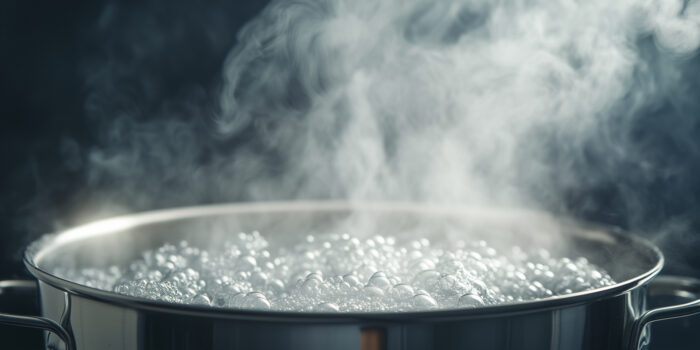
The most stringent view requires that the wine reaches its boiling point. For water and grape juice, this is 212°F at sea level. Wine boils at a lower temperature, depending on its alcohol content. At higher altitudes, the boiling point is correspondingly reduced. Some maintain that the wine must be heated until a noticeable change in taste occurs.
Others require that the cooking results in some degree of evaporation and reduction in volume. Within this approach, there is further debate, ranging from those who require only minimal evaporation to those who require a more substantial reduction.
An even more lenient view maintains that wine becomes mevushal once it reaches yad soledes bo.
Practically speaking, the opinions span a broad range of temperatures, from approximately 165°F on the low end to 212°F on the high end. Commonly cited intermediate thresholds include 175°F, 180°F, 184°F, 187°F, and 194°F.
OK Kosher requires a minimum temperature of 187°F for wine to be considered mevushal.
Pasteurization
A major contemporary question is whether pasteurization renders wine mevushal. Standard wine pasteurization is performed in a closed system at approximately 165°F to eliminate bacteria. In such a system, the wine does not lose volume since steam is not permitted to escape. Additionally, 165°F is below the temperature that most authorities consider sufficient. For these reasons, many Poskim rule that ordinary pasteurization does not qualify as mevushal.
Kashrus agencies differ in their approach to this issue. The OK requires BOTH a minimum temperature of 187°F and the installation of a valve in the heating section of the pasteurizer to allow steam to escape and ensure a measurable reduction in volume.
Some Poskim maintain that pasteurization is never sufficient and require the wine to be boiled in a pot in the conventional manner for it to be considered mevushal. However, the mainstream halachic approach is to regard pasteurized wine as mevushal if it meets the criteria outlined above.
1 Yoreh Deah 123:3.