 EN
EN  ZH
ZH  KR
KR  BR
BR  ES
ES  IN
IN  IL
IL  JP
JP 
Published:
December 12, 2025
Author:
Rabbi Levi Schapiro
Reading time:
4 minutes
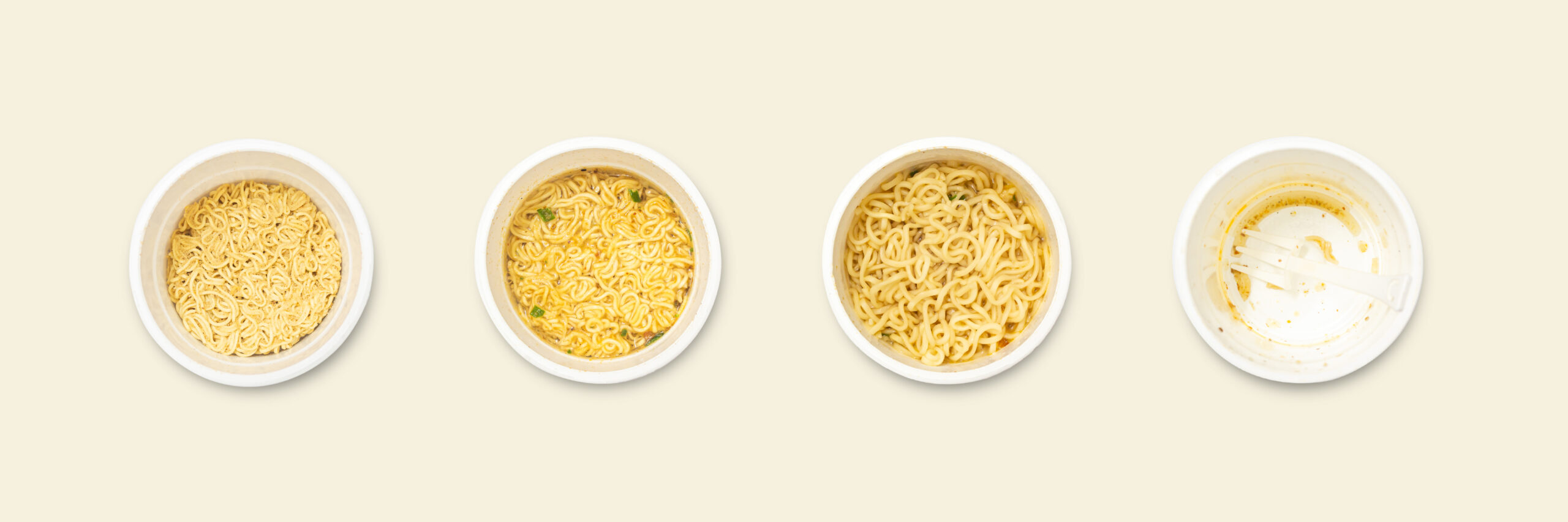
CAN ONE PREPARE INSTANT SOUP ON SHABBOS?
There are a few areas of Hilchos Shabbos that must be examined to answer this question.
In addition, there are different methods of production, as well as various components of the soup that must be considered.
Bishul
The primary issue to discuss is the prohibition of bishul (cooking) on Shabbos.
Does the prohibition of cooking still apply if one does not place the food directly on the fire? Food that has already been fully cooked and remains solid after heating is not subject to the prohibition of cooking (ein bishul achar bishul). Still, mi’drabbanan, one may not place cold food directly on the fire, but one may place it in hot water that has been removed from the heat source. (If, however, the food had been previously baked (like kugel), this leniency does not apply.)
Food that has not been fully cooked may not be placed in hot water that is above Yad Soledes Bo (approx. 115°F). However, once it is transferred to a second vessel (kli sheini), the likelihood of actual cooking is diminished. Nevertheless, there is still a prohibition of preparing food in a second vessel (kli sheini), because there are some items that will still cook in the second vessel (and we do not have an exact determination of what they are), and there is an issur mi’drabbanan because it is so close to a kli rishon (primary vessel). If the hot water is further transferred to a third vessel (kli shlishi), according to most opinions¹, it no longer has the potential to cook, and it is permissible to add uncooked food to water in a kli shlishi. However, foods that are uncooked and only require minimal heat to soften them and make them edible are forbidden even in a kli shlishi².
Let us now address each component of instant soup.
Instant Noodles
The production process of the noodles can vary depending on the company. Wheat-based noodles are usually steamed and fried before being dried and packaged. Therefore, the rule of ein bishul achar bishul would apply, and they may be placed in hot water that has been removed from the heat source. In addition, they are fully edible even in their dry state and can be eaten as a snack or used as a salad topping. However, some companies may produce instant noodles without completely frying them, so one should only heat them in a kli shlishi.
Rice-based noodles are typically not fried; therefore, they may not be placed in hot water that has been removed from the heat source. In addition, they are not edible in their dry state and require minimal heat to prepare them, so they may not be prepared on Shabbos.
Dehydrated Vegetables
Depending on the vegetables that are used, they are typically blanched but not fully cooked (in some instances, they are fully cooked) and dehydrated before packaging. Because they are not edible in their current state and require minimal heat, they may not be prepared on Shabbos, even in a kli shlishi.³
Flavor Powder
The flavor powder is typically a blend of various spices and includes spices that were not previously cooked. However, because they will dissolve in the water, they are not subject to the issur of bishul when prepared in a kli shlishi.
Other Halachic Considerations
Makeh B’patish/Tikkun Kli:
Makeh b’patish and tikkun kli are part of the prohibition of completing the construction of a utensil. There is a prohibition against making something useful on Shabbos; however, according to the simple understanding of Shulchan Oruch, this does not include preparing food and changing it from inedible to edible.4 There are some authorities that say that it does apply if any heat was used.5 According to this stricter view, rice noodles and dehydrated vegetables may not be prepared on Shabbos. Wheat-based noodles are edible in their dry form and permitted according to all opinions.
Losh (Kneading):
Kneading is defined by blending flour or other dry solids/powders with liquid to create a thickened batter. Adding a small amount of powder that dissolves in liquid (or if the solid does not stick together due to the high amount of liquid) does not violate the prohibition.
Conclusion
One may prepare instant noodle soup (including the spice blend) in a kli shlishi on Shabbos; however, the vegetables should not be added. If the vegetables are already blended into the noodles, the soup may not be prepared on Shabbos. Rice-based noodles may not be prepared on Shabbos.
1 The opinion of the Yeraim is that the third and fourth vessel should be considered the same as the second.
ראה בכ”ז שו”ע סי’ שי”ח סע”ד ושוע”ר סעי”א 2
3 If one can confirm that the vegetables were already fully cooked, it would be permitted to reheat and rehydrate on Shabbos (unless one follows the stricter view regarding tikun kli [see below]).
שו”ע סי’ שכ”ד סע”ד 4
ראה ביה”ל סי’ שיח ד”ה והדחתן, ובדי השולחן סי’ קל אות ו’ ו אות י 5