 EN
EN  ZH
ZH  KR
KR  BR
BR  ES
ES  IN
IN  IL
IL  JP
JP  TH
TH 
Published:
December 12, 2025
Author:
Rabbi Yakov Teichman
Reading time:
4 minutes
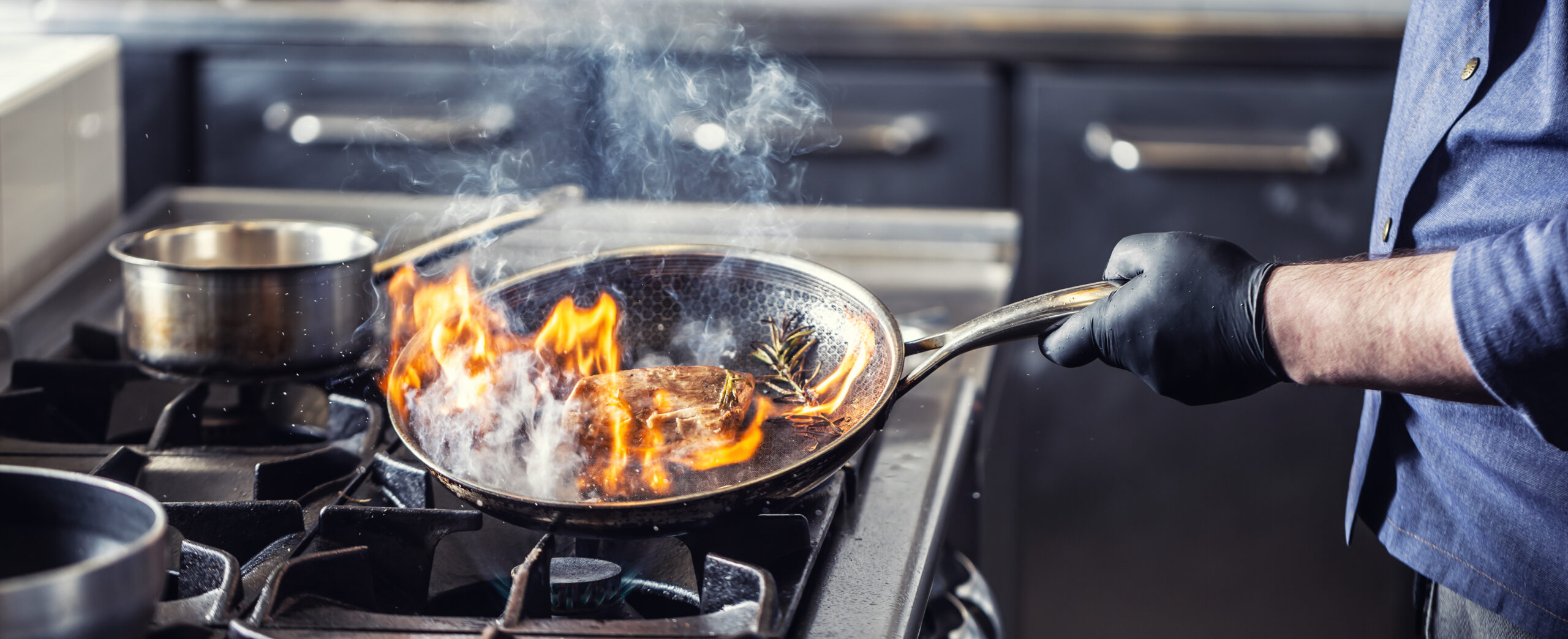
To preserve the unique identity of the Jewish people and maintain appropriate social boundaries, Chazal instituted a regulation prohibiting the consumption of certain foods cooked by a non-Jew. This safeguard helps ensure that Jews avoid accidentally eating non-kosher food, socializing, assimilating and intermarrying with non-Jews.¹ Two general factors determine which foods are included in this prohibition: it is fit to serve at a king’s table ( ,(עולה על שולחן מלכים AND cannot be eaten raw ( אינו נאכל חי ). Additionally, this prohibition only applies if the non-Jew cooks the food entirely alone; if a Jewish person participates in the cooking process, the food is permitted. Products that were already cooked and are only being reheated are exempt from the requirements of Bishul Yisroel.
Fit for a King’s Table עולה על שלחן מלכים
Foods that can be served at a formal meal, such as a wedding, formal dinner, or state dinner, require Bishul Yisroel. This applies only to the whole food, not when it is used as a minor ingredient or coating. For example, eggs require Bishul Yisroel, but egg wash on bread does not. A question arises when a particular form of a food—such as potato chips—is not typically served at formal meals, while other forms of the same food, like roasted or mashed potatoes, are. In such a case, is Bishul Yisroel required for the potato chips?
Not Edible Raw אינו נאכל חי
Bishul Yisroel is only required when the food in question must be cooked; therefore, all products that are eaten raw are not subject to the halachos of Bishul Yisroel. Some common examples are apples, carrots, celery, peppers, and nuts.
What Constitutes Cooking?
Halachic cooking requires the food to be heated. Conventional forms of cooking definitely require the involvement of a Jew. There is discussion among the contemporary Poskim regarding new methods of cooking, like microwave, induction, and sous vide, and if they are subject to Bishul Yisroel. Steaming can be done by direct steam or indirect steam. The former does not require Bishul Yisroel, while the latter does. Marinating, salting, pickling, sun-drying, and cold smoking are not cooking and therefore do not require the involvement of a Jew.
Methods of Bishul Yisroel
When Bishul Yisroel is required, a Jew must participate in the cooking. There are multiple ways for a Jew to render a product Bishul Yisroel:
• Placing the food on an existing fire (regardless of who lit the fire).
• Being physically involved in the cooking process (stirring the pot while the food is still cooking).
• Turning on the fire after the food is in the oven or on the stovetop.
• There is a well-known disagreement between the Mechaber (Sephardim) and the Rema (Ashkenazim) about whether a non-Jew can put food on the stove or in the oven that was already lit by a Jew. According to the Mechaber, a Jew needs to place the food on the stove or oven even if it was already lit by a Jew. This is known as Bishul Beis Yosef. According to the Rema, as long as the Jew lit the stove or oven, it is sufficient.
• If a product was initially inedible and cooked by a non-Jew (like potato flakes for instant mashed potatoes) but is later made edible through a second cooking done by a Jew, the food becomes Bishul Yisroel.²
• Lastly, if the product was cooked but not all the way, it can still be “saved”. The point where it becomes “too late” to save is a disagreement between the Mechaber and the Rema. According to the Mechaber, it can be made Bishul Yisroel only until it is 1/3rd cooked, and according to the Rema, it can be made Bishul Yisroel if it is not finished cooking.
יורה דעה סי’ קי”ג 1
2 The Beis Yosef in his teshuvos, Avkas Rochel (Siman 30) writes that if a cooked food is dried and cannot be consumed without further cooking, the food is viewed as raw.