 EN
EN  ZH
ZH  KR
KR  BR
BR  ES
ES  IN
IN  IL
IL  JP
JP  TH
TH 
Published:
March 25, 2026
Author:
Rabbi Sholom Ber Lepkivker
Reading time:
3 minutes
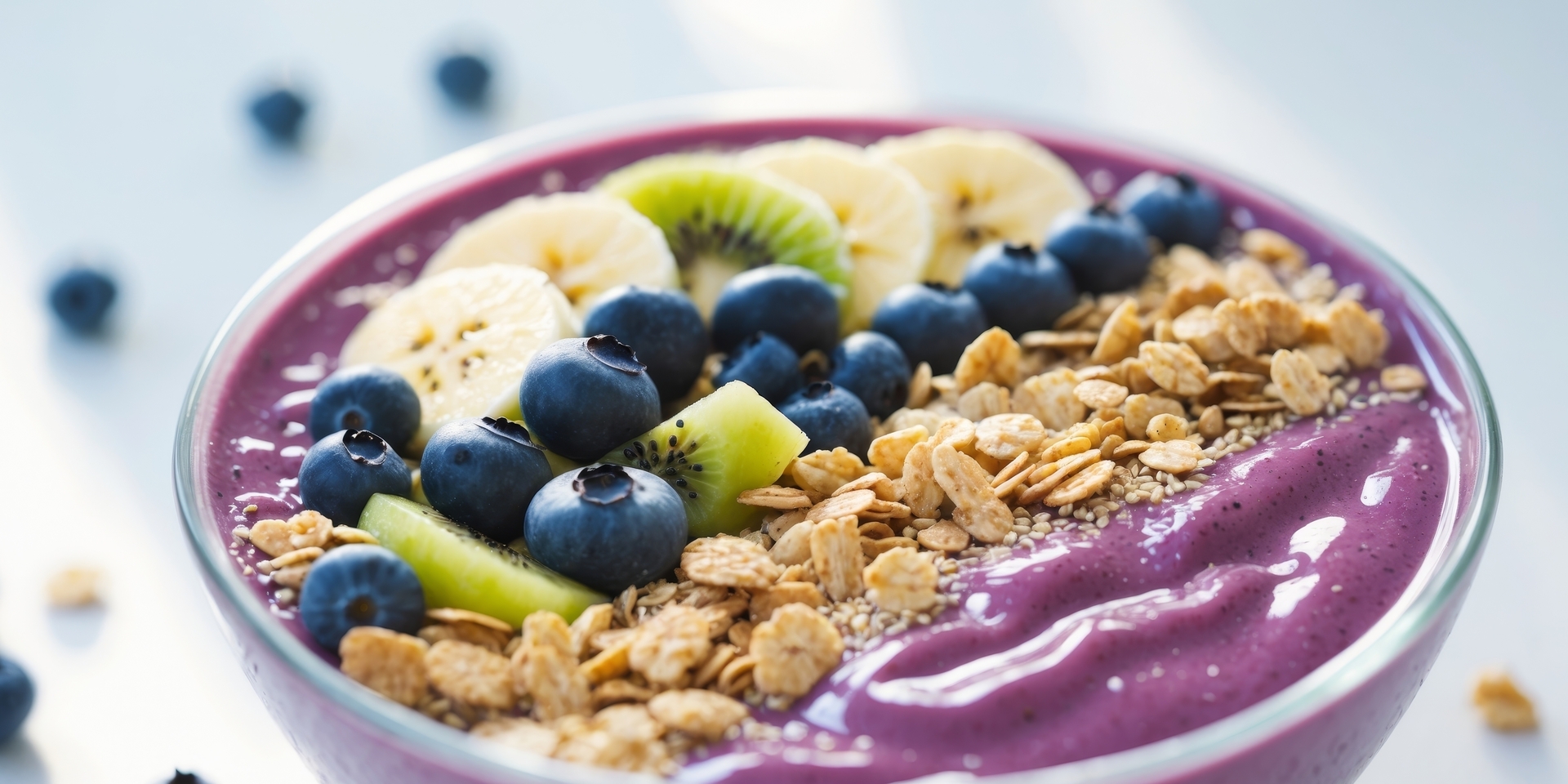
Açaí [ah-sah-EE] bowls have a surprisingly interesting backstory. They trace back to Amazonian tribes who would mash açaí berries from the açaí palm into a savory dish. The sweet version we know today did not appear until the 1980s, when it became popular in Brazil. From there, it made its way to the U.S. in the 2000s by way of Hawaii, where surfers helped turn it into the sensation it is today.
The açaí berry itself is naturally low in sugar (unlike most fruits) and packed with nutrients. It is often praised for supporting heart health, brain function, and metabolism. That said, the modern açaí bowl — sweet, colorful, and piled high with toppings — is closer to dessert than a healthy food.
Just as one should be mindful of what goes into the body, one should also know what brocha to make on these aesthetic creations.
What’s in an açaí bowl?
The base of an açaí bowl is made with açaí berry puree or powder. The açaí berry rots within 24 hours of harvesting, so açaí is immediately pureed or powdered after harvesting. The açaí base is typically blended with frozen fruit like bananas and strawberries, plus some liquid (often apple juice) and sweeteners. On top, you will usually find granola, chia seeds, fresh fruit, coconut flakes, nut butters, chocolate chunks, and generous drizzles of honey or maple syrup.
In short: it is basically a very attractive cholent — just significantly colder (and maybe tastier?)
So, what’s the brocha?
The general rule when determining a brocha for a mixture ( עיקר וטפל ) is that the primary ingredient — the ikar — determines the blessing. Secondary ingredients — the tafel — are covered by the primary brocha.
If two components are both significant and neither is merely enhancing the other, then we follow the majority ingredient.
Since the açaí berry base is both the primary¹ and the majority component of the bowl, the appropriate brocha is ha’eitz, which covers the entire blend. No additional brocha is needed for the fruits and other ingredients included in the blend.
Toppings, even if distinguished from one another, are also included in the brocha on the açaí, as the açaí is the ikar.² There is an important exception: if a mezonos item — such as granola clusters or cookie pieces — is added to enhance the açaí bowl, the mezonos takes precedence due to its inherent importance. In that case, the brocha would be mezonos.
There are other opinions that the toppings are not considered part of the mixture, because they are not blended in; however, the first ruling is the prevailing opinion. Of course, if one’s intention were to eat the toppings as the main component and one only decided to add the açaí puree as an extra, a brocha on the individual toppings AND the açaí puree would be required.³
If you eat an açaí bowl specifically because it is açaí: Ha’eitz
If you are eating an açaí bowl because of the whole bowl (i.e., you don’t really care what the puree is made from): Ha’eitz on one of the fruit toppings (the açaí puree is covered by this brocha), and then ha’adamah on a fruit topping. If there is no ha’eitz fruit, you make ha’eitz on the puree and ha’adamah on the fruit.
1 See ’שו’’ע אדמו’’ר ס’ רי’’ב ס’ א
2 See: שו’’ע אדמו’’ר שם, משנ’’ב שם , where it is ruled that even if the items are fully separate,
they are considered a “mixture” and are affected by the ikar and tafel rules.
3 See שו’’ע אדמו’’ר ס’ רד ס’ י’’ז