 EN
EN  ZH
ZH  KR
KR  BR
BR  ES
ES  IN
IN  IL
IL  JP
JP  TH
TH 
Published:
May 6, 2026
Author:
Editor
Reading time:
4 minutes
A supplier, newly certified, shared that they hadn’t been using the kosher symbol on their packaging. Not because they couldn’t. They didn’t see why.
They had a fair question, and one that reveals how much impact the OK Kosher symbol can have across the supply chain.
One hundred percent of their products moved in bulk: large totes, supersacks, industrial formats. Their customers accepted the kosher certificates, and nothing in their day-to-day operations seemed to require more.
So internally, the question came up: how should situations like this be handled? Is there a policy? What are the benefits?
Two Different Worlds: Retail vs. Industrial
To understand the full picture, it helps to separate two very different contexts: retail and industrial supply chains (B2B).
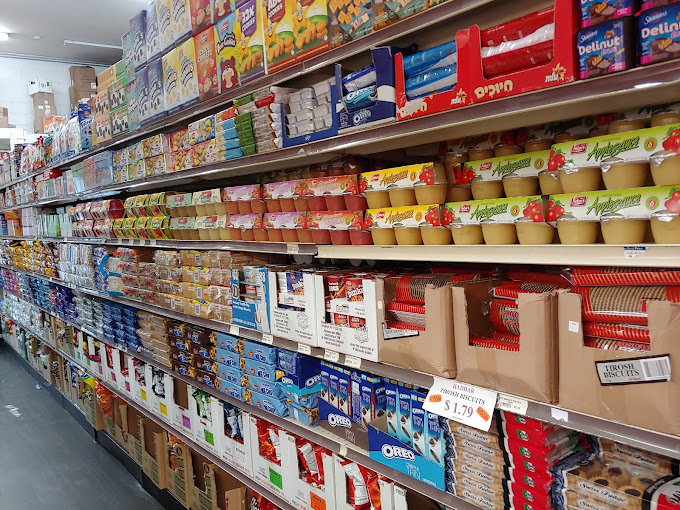
At the Retail Level: The Symbol Is the Message
For consumers, the kosher symbol is everything. Kosher certification applies only when the symbol appears on the product. Without the symbol, the product is not being presented as certified, regardless of its internal status or documentation.
It’s how someone standing in a store knows:
• Whether a product is certified
• What its status is (pareve, dairy, meat, etc.)
• Whether it meets their needs
There’s no access to documentation. The symbol is the communication. Without it, the product simply isn’t communicating kosher certification.
At the Industrial Level: The System Behind the Scenes
In B2B, the dynamics vary.
Products aren’t being evaluated by consumers; they’re being evaluated by certifying agencies, procurement teams, and quality departments.
This is where a less visible, but critical, framework comes into play: the Kosher Group System.
What Is the Kosher Group System?
When ingredients are submitted by certified manufacturers for approval in their finished products, they aren’t treated equally.
They’re categorized into groups based on how much verification they require.
Most companies are familiar with the high-level kosher categories like meat, dairy, pareve, and Passover. But within those, the group system determines how an ingredient must be reviewed, sourced, and approved.
A Practical Look at How Ingredients Are Evaluated
The group system reflects a simple reality: not all raw materials carry the same level of complexity.
Group examples:
• Group 1: Supplier Source required, but no kosher certificate is currently required
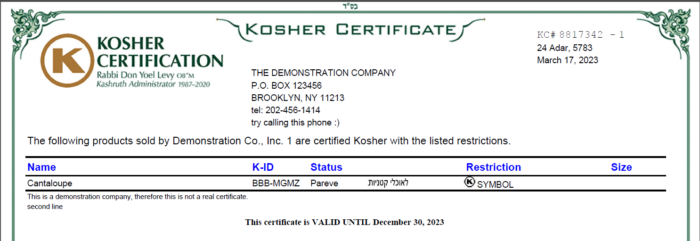
• Group 2: Certification required, but a symbol is not required on packaging
• Group 3: Requires a pre-printed kosher symbol
• Higher-control groups (such as Group 3A, 3b, 3C & 5) may require stricter controls like verified transport or rabbinic seals
And then there are others:
• Group 6: Materials allowed in a facility but not in certified products
• Group 7: Materials not permitted at all
This is the system certifying agencies rely on during inspections, including the framework used by OK Kosher Certification to evaluate ingredients and facilities.
Certified OK Kosher clients can explore the full group system in the manufacturing manual available in the digital kosher portal.
Where the Symbol Still Matters at the Industrial Level
As a policy, when an OK Kosher product’s certificate requires the use of a kosher symbol on packaging, that requirement is part of the certification itself. Any decision by a third party to accept or approve the product without the symbol is their responsibility.
It might seem like the symbol matters less in B2B, but in practice, it still plays an important role. When a product or raw material carries a recognized kosher symbol, it provides immediate clarity. Without it, the product may still be acceptable, but it often requires more review, more documentation, and more time (alternatively, can lead to delays and likely returns).
Why Many Manufacturers Choose to Use the Symbol
This is why, in practice, most manufacturers worldwide choose to use the kosher symbol wherever they can.
Not always because they’re required to, but because it works in their favor.
It makes things:
• Easier for customers to evaluate
• Easier for certifiers to approve
• Easier to expand into new markets
What seems like a small packaging decision often removes friction across the entire supply chain.
It’s also an opportunity to reflect on your standards. In practice, your choice of kosher certification and how visibly it’s represented becomes part of your product’s story.
For companies entering kosher certification, this often becomes one of the simplest ways to gain market awareness.
The Bottom Line
In retail, the symbol is essential.
In B2B, the group system determines requirements on a case-by-case basis, but the symbol is still a worthwhile investment in telling your story.
When the symbol is there, it doesn’t just represent certification.
It makes your certification status easier to recognize, easier to trust, and easier to work with.